How To Write A Book Proposal


We were recently asked about what specifically should be included in the author bio section of your proposal.

Over the last few weeks we have been blogging about the various sections of a book proposal. Beyond all the standard sections that need to be included, there are some added value items writers can include to enhance their overall proposal.

Everybody hates talking about platform. We get it. We do to. But the reality of publishing today is you have to be building one. For reasons we'll tackle in a later post, the ability of a publisher to "make" a bestseller has diminished greatly. The unfortunate reality is that most books are sold to the author's audience. The platform section is where you describe how you intend to reach an audience with your message.

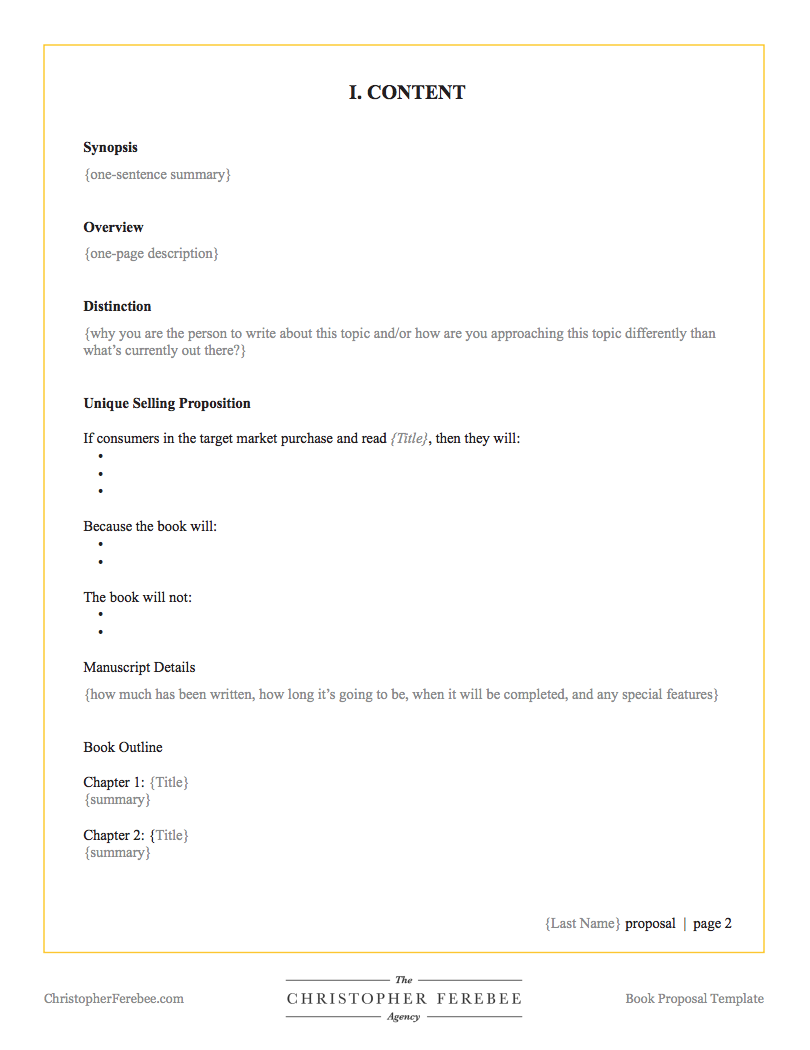
As you’re developing your proposal, it’s important to include information about your manuscript, but what exactly should it encompass?

Your title and subtitle are the lenses your prospective agent or editor puts on and sees the rest of your proposal through.

When putting together a nonfiction proposal, it’s important to have sample writing, but not your entire manuscript--unless specifically requested [see here for the reason]. So how many chapters should you include?

A reader asked: How far along in the book writing process should you be before submitting a book proposal?

When putting together your proposal, please put as much care into it as if it were going to be published itself. There are some things that immediately stand out to agents and publishers alike that may make them think twice about continuing to read (as there is no lack of proposal submissions). Here are a few tips to keep in mind as you craft your perfect proposal.

You’ve been working on your killer idea. You’ve put time into developing your chapters, your narrative arc, your proposal. By chance you run into a publisher who asks, “So what’s your book about?” You have 30 seconds to tell her. You’ve been waiting for this moment! You can do this! But your mind goes blank …

So you’ve been writing for years and have decided to finally put a proposal together to secure an agent and/or send it to a publisher. You’ve spent hours upon hours honing your craft, playing around with tone, figuring out the point-of-view, developing a solid structure, and so on.

Your proposal is not only the tool by which you will obtain your literary agent, it's also the tool your agent will use to shop your book and, hopefully, get you a publishing deal. I want to share some tips on things you should and shouldn't do when putting your proposal together.